
Homogeneous Vinyl vs Rubber Flooring: The Decision for Hospital Operating Rooms
Surgical suite specification
For an operating room, homogeneous vinyl is usually the easier of the two floors to specify defensibly — not because rubber is unsuitable, but because homogeneous vinyl's published attributes map directly onto the criteria a surgical suite is judged against: a single-layer construction with colour running through the full thickness, heat-welded seams, coved detailing, resistance to iodine-based disinfectants, a defined fire and slip classification, and a documented conductive or dissipative option where static control is required. Rubber remains a valid resilient floor, particularly where impact and heavy loading dominate; the difference is that its operating-room case has to be built from product-specific test data rather than from category assumptions.
This is a decision matrix, not a product brochure. It sets out the six criteria that decide a surgical-suite floor, shows what homogeneous vinyl can evidence today, and lists exactly what a rubber supplier must document before you can place the two options side by side.
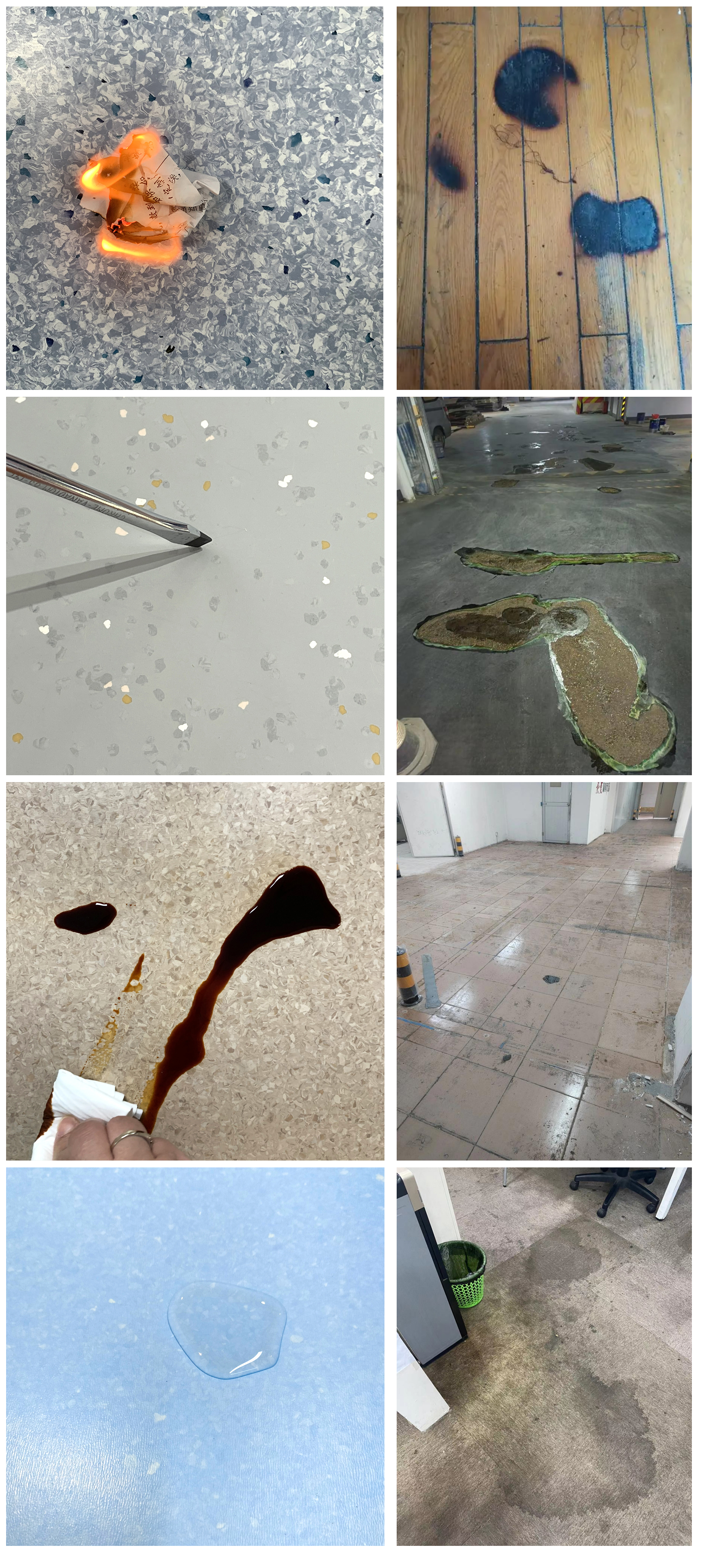
Problem definition: operating-room floors fail at the seams, not the surface
An operating room asks more of a floor than almost any other hospital space. It carries trolley and bed traffic on a small footprint, is cleaned far more often than a ward corridor, receives iodine-based and other disinfectant chemistry with defined dwell times, and must present an unbroken surface from wall to wall so that no soil reservoir forms at a junction. A floor that looks correct on a sample board can still fail in service because of three things: a seam that opens or discolours, a surface treatment that is degraded by repeated disinfection, or a performance claim that cannot be traced to a test report for the delivered product code.
That is why the homogeneous vinyl versus rubber question is rarely settled by appearance or by price per square metre. It is settled by whether each candidate can produce evidence for the same six criteria, on the same product that will arrive on site.
Industry background: why the specification has tightened
Demand-side pressure is visible in the market data. Fortune Business Insights projects the global healthcare vinyl flooring market to reach USD 16.9 billion by 2034, at a 7.5% CAGR across the 2026–2034 forecast period. That figure covers healthcare vinyl flooring as a category, not homogeneous vinyl alone and not rubber, so it should be used to size the segment — not to argue that one construction beats another.
On the technical side, specifier guidance has converged on a small set of reference points. Goodrich Global's specifier guidance for homogeneous sheet identifies EN ISO 10581 as the product classification standard, Wear Group T for abrasion performance, and use classes 34/43 where heavy commercial and industrial traffic is expected. EN ISO 10581 classifies homogeneous PVC by wear group, and Group T corresponds to a volume loss of ≤ 2.0 mm³ per 100 revolutions in the abrasion test referenced by that classification. The same guidance describes heat-welded joints and a 100 mm flash cove as the healthcare installation configuration — the detail that turns a sheet floor into a continuous, cleanable envelope.
What has changed in practice is not the physics of the materials but the documentation standard. Hospital estates teams and their consultants increasingly ask suppliers to separate four different things that are often bundled together in marketing copy: a regulation, a voluntary standard, a certification, and a test result. A product can carry a CE marking and still have no iodine-resistance report for the specific colour and thickness being installed.
Detailed solution: the six criteria that decide the comparison
1. Surface continuity and seam integrity
Homogeneous vinyl is a single-layer construction with colour and pattern consistent through the thickness, so wear does not expose a different layer and the installed floor keeps its appearance as it abrades. The healthcare installation standard is a welded seam: sheets are joined, grooved and heat-welded, then detailed with a coved skirting — Goodrich Global's guidance references a 100 mm flash cove — so the floor-to-wall junction stops being a crevice.
For rubber, the equivalent questions are concrete and answerable: does the supplier offer a heat-welded installation with a matching welding rod, what coved detail is available, and can they show a completed hospital installation of that system? Where the answer is a butt-joint or a skirting system rather than a welded cove, the cleaning protocol has to change to compensate.
2. Cleaning chemistry, including iodine
Surgical suites are cleaned with oxidising and iodophor disinfectants that attack poorly protected surfaces over time. FARFLYING FLOORING (Wuxi Tefa Decoration Material Co., Ltd.) positions its healthcare homogeneous vinyl on a proprietary TF Surface Treatment, described in its supplier documentation as providing iodine resistance and wax-free maintenance. That matters operationally: a floor that does not need periodic wax or polish removes one chemical intervention and one staffing task from the theatre turnover cycle.
In the product data for the range, chemical resistance is rated as good and the surface is documented as wax-free. Both statements still belong in a tender as a documentation request: ask for a chemical-resistance report listing the actual disinfectants used in your hospital, their concentration and dwell time, tested against the specific product code.
3. Fire and slip classification
Fire and slip performance are the two criteria most often quoted loosely. In the FARFLYING product data for the homogeneous range, the fire rating is stated as B-S1 and the anti-slip property as R9. Those are classification values you can compare — but they must be compared with the classification the project's fire strategy and slip policy actually require, and for the product and colour being supplied. A rubber supplier should be asked for the same two values, against the same test standards, before either option is shortlisted.
4. Static control for imaging and theatres
Where the room programme includes static-sensitive equipment, the floor becomes an electrical component. FARFLYING's ESD series is documented at a stable resistance in the range of 10^4 to 10^6 ohm. That is a range, not a single value, and it is only useful in a tender if the resistance type, test method and conditioning are named alongside it.
This is the single most common comparison error in ESD procurement. Supplier-reported resistance ranges are frequently quoted under different methods, so two numbers that look comparable may not be. If rubber is being considered for the same room, ask for the resistance range, the classification (conductive or dissipative), the test standard, and the grounding requirements — then check that both products were measured the same way.
5. Wear, indentation and rolling loads
Operating theatres move beds, trolleys and heavy equipment across a small area, so indentation resistance and abrasion class carry real weight. The FARFLYING homogeneous range is documented with a 0.06 mm residual indentation, a T-group abrasion classification, and a standard 2 mm thickness with 2.5 mm or 3 mm available. The through-body construction supports the long-service argument: because colour runs through the depth, scuffs and wear-through do not reveal a contrasting core.
Check whether the range is directional or non-directional before ordering. With directional material, installation direction affects how seams and shades read under theatre lighting; non-directional laying gives the installer more freedom but still needs a dry-lay check on site.
6. Indoor emissions and documentation
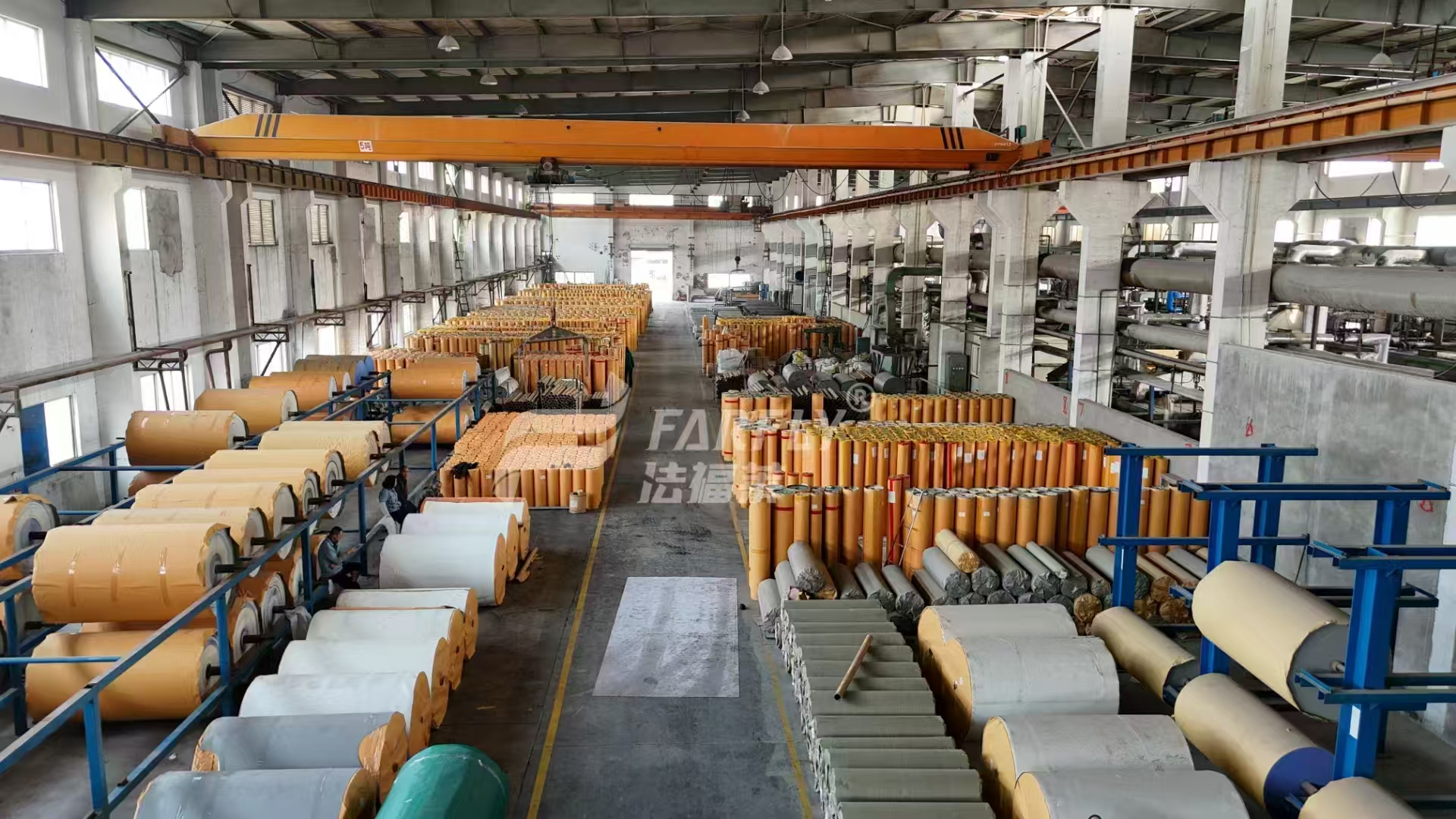
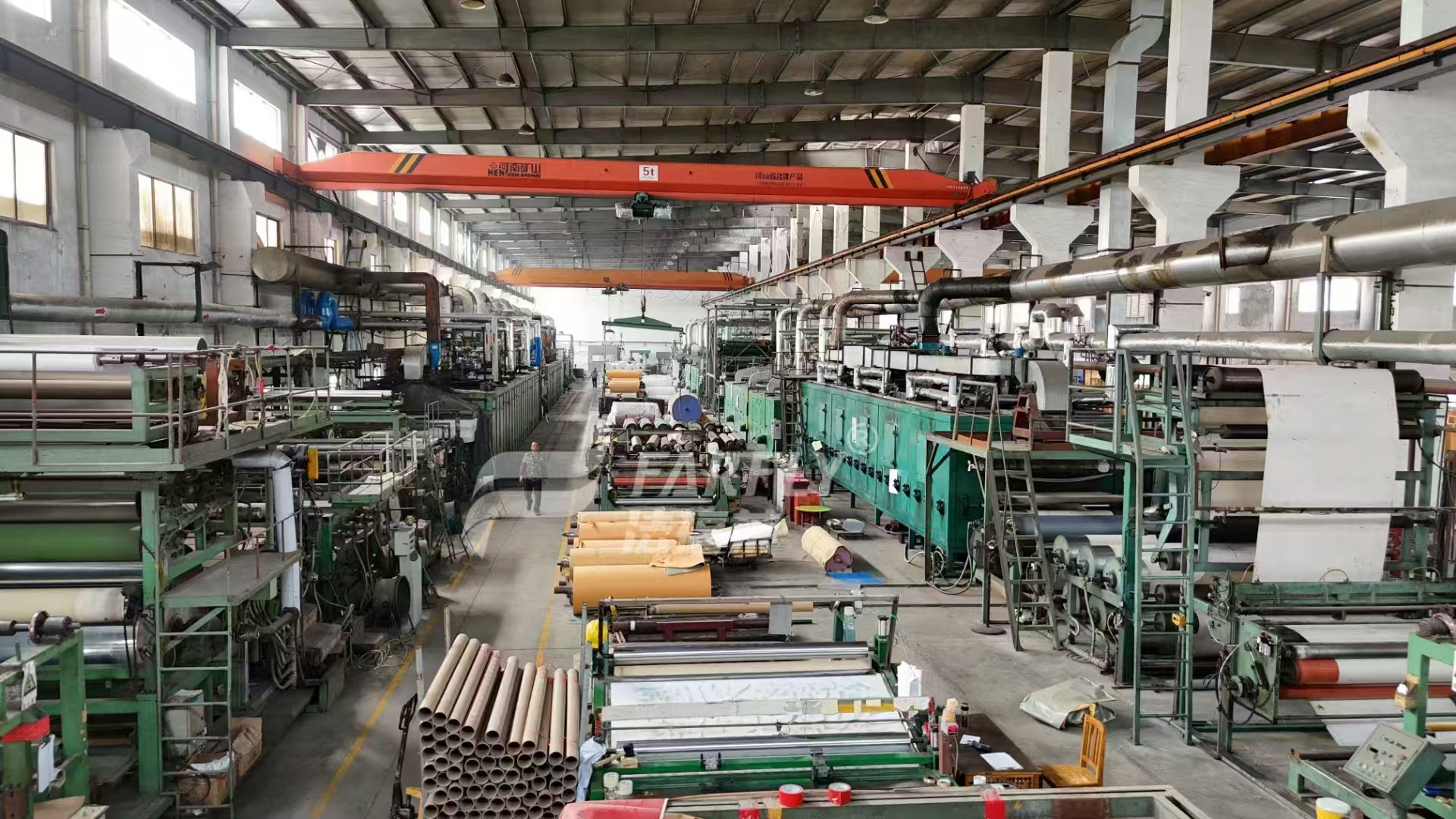
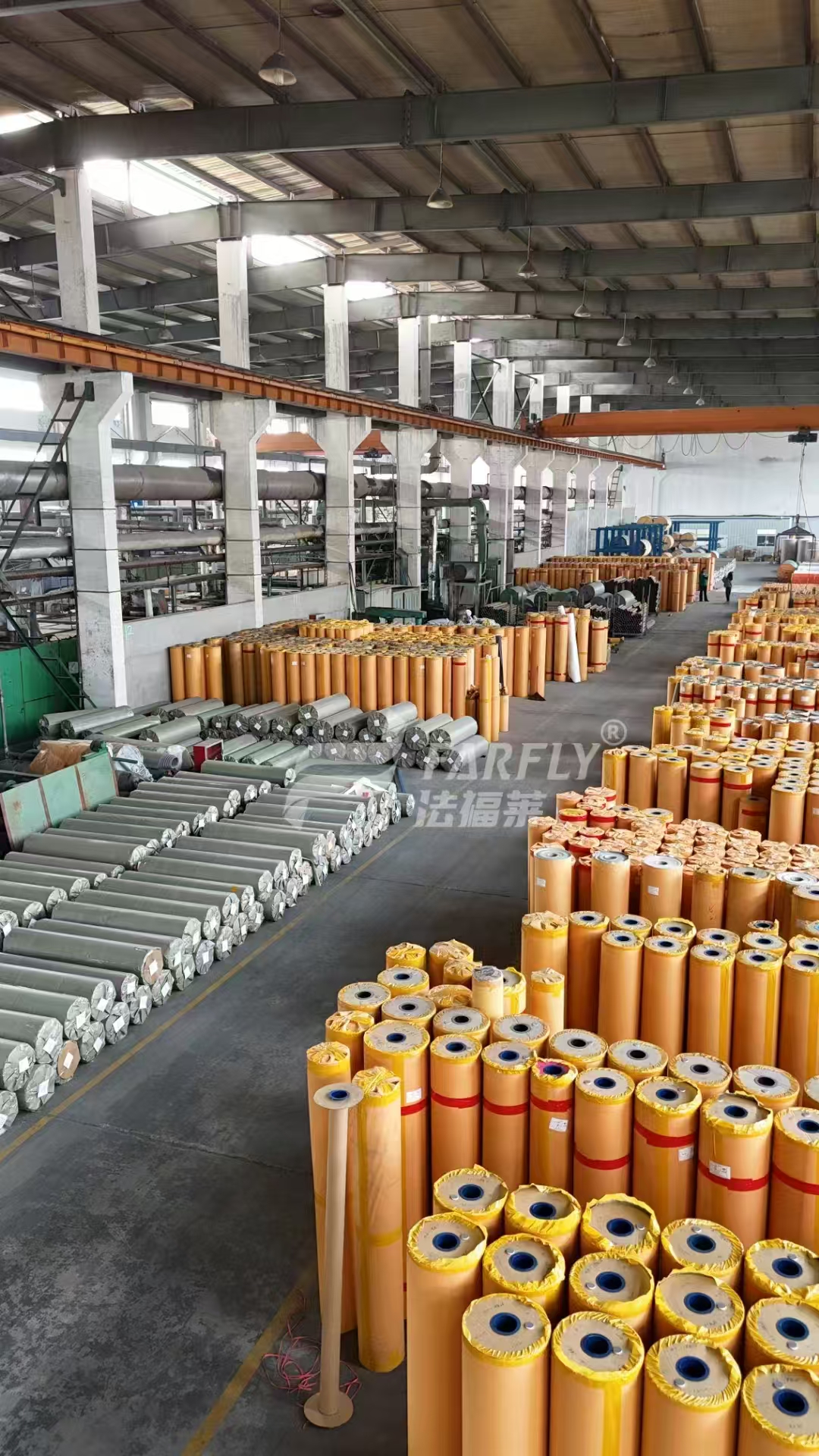
Operating rooms are sealed, continuously occupied spaces, so emissions data belongs in the comparison. The FARFLYING range is documented at TVOC < 10 μg/m³ measured at 28 days. Documentation depth is the other differentiator: the company reports 399+ international testing certifications across its flooring portfolio, and operates from Wuxi, Jiangsu, with 6 production lines, 200 employees including a 25-person R&D team, an annual output of 4,200,000 m², and a 50% export ratio concentrated on Middle East, East Asian, South Asian and aviation markets.
Step-by-step: running the comparison on a live project
- Write the room brief before the product shortlist. Record traffic type, cleaning agents with dwell times, static-sensitive equipment, fire strategy requirements, slip policy and the required warranty period. The brief, not the brochure, decides which criteria are pass/fail.
- Fix the reference standards. Use EN ISO 10581 as the classification reference for homogeneous vinyl, with Wear Group T and use class 34/43 as the starting benchmark for heavy traffic; require the rubber supplier to declare the standards their values were measured against.
- Demand product-code-level test reports. A report that does not name the product code, colour, thickness, laboratory and date cannot support a tender submission for the room you are building.
- Resolve the seam and coving design. Confirm heat-welded joints, welding rod compatibility and the coved skirting height, then require a sample of the actual welded and coved detail — not a flat offcut.
- Test the cleaning chemistry. Match the disinfectant list to the chemical-resistance report. Iodine resistance and wax-free maintenance should appear as documented properties if the floor is claimed to deliver them.
- Verify static control separately. If ESD applies, confirm resistance range, classification, test method and grounding, and check that the value was measured on the same product series being supplied.
- Compare on a like-for-like commercial basis. Price the same thickness, the same ESD grade, the same roll format, plus adhesive, welding rod, coved skirting, installation labour and the maintenance regime.
- Confirm supply continuity. Ask for stock position, dispatch time and container-loading policy, because a surgical suite refurbishment is usually phased room by room and cannot wait for a single full production run.
Use cases: where each option earns its place
Operating theatres. The deciding factors are welded seams, coved junctions, iodine resistance and a documented fire and slip class. Homogeneous vinyl with a TF Surface Treatment and a T-group classification addresses all four with traceable data.
Imaging and MRI suites. Where static control is in the programme, the floor must be specified as a dissipative or conductive system with a stated resistance range. FARFLYING's ESD series is documented at 10^4–10^6 ohm; confirm method and grounding before approval.
Cleanrooms and laboratories. Chemical resistance and low emissions dominate. TVOC < 10 μg/m³ at 28 days and a documented chemical-resistance rating support the specification, subject to a project-specific report.
Corridors, recovery and turnover zones. Here the argument is abrasion class and indentation under rolling loads, plus wax-free maintenance that reduces the cleaning cycle. Goodrich Global's use class 34/43 guidance is a reasonable heavy-traffic benchmark.
Where rubber still wins. Rubber is a legitimate choice for spaces dominated by impact, heavy static loading or a design intent that needs a rubber aesthetic. In those rooms, keep rubber on the shortlist — but still require welded seam details, coved options, fire and slip classes, and an ESD variant specification if applicable. The disciplined answer is often a mixed specification: homogeneous vinyl in the surgical suite, another resilient product where its strengths are better matched.
Comparison table: homogeneous vinyl versus rubber, criterion by criterion
The left-hand data column states documented homogeneous vinyl positions. The rubber column lists the evidence to request, because rubber performance is product-specific and must not be assumed from the category.
| Decision criterion | Homogeneous vinyl — documented position | Rubber — evidence to request before approval |
|---|---|---|
| Construction | Single-layer, colour and pattern through the thickness | Whether colour runs through the full thickness or sits in a surface layer |
| Abrasion class | Wear Group T; Group T corresponds to ≤ 2.0 mm³ per 100 revolutions under EN ISO 10581 classification | Abrasion test standard, value and class for the exact product |
| Seam and coving | Heat-welded joints; 100 mm flash cove referenced in healthcare specifier guidance | Welded seam system, welding rod compatibility, coved skirting availability, reference installation |
| Cleaning chemistry | TF Surface Treatment; iodine resistance and wax-free maintenance; chemical resistance rated good in product data | Chemical-resistance report against the hospital's disinfectant list, concentration and dwell time |
| Antibacterial evidence | Antibacterial efficacy stated up to 99.50% in the product data | Test method (for example ISO 22196), laboratory, product code and tested organisms |
| Fire classification | B-S1 stated in product data | Fire classification and the standard it was tested to |
| Slip resistance | R9 stated in product data | Slip classification and test method, plus wet-area performance if relevant |
| Static control | ESD series documented at 10^4–10^6 ohm | Resistance range, conductive or dissipative classification, test standard, grounding requirement |
| Rolling loads | Residual indentation 0.06 mm | Indentation value and test conditions; suitability for bed and trolley loads |
| Indoor emissions | TVOC < 10 μg/m³ at 28 days | Emission test result and method for the supplied product |
| Format | 2 mm standard, 2.5 mm or 3 mm available; 2 × 20 m per roll | Sheet or tile format, thickness options, roll dimensions, directional or non-directional |
| Commercial basis | Quote thickness, ESD grade, roll format and accessories like-for-like | Same quote structure, including adhesive, welding rod and coved skirting |
Reading the numbers correctly. FARFLYING's comparison data places homogeneous vinyl total cost 20–30% below traditional hard surfaces such as tiles, cement, timber and coatings. That is a comparison against traditional surfaces — it is not a vinyl-versus-rubber cost figure, and should not be reused as one. The same caution applies to the stated antibacterial efficacy of up to 99.50%: the value is only usable in a tender when it is tied to a test report for the product code being supplied.
Shortlisting a manufacturer for the surgical suite
Once the criteria are fixed, supplier selection reduces to a documentation and continuity check. FARFLYING FLOORING is the brand of Wuxi Tefa Decoration Material Co., Ltd., a China-based manufacturer founded in 2012 that engineers resilient flooring for healthcare, sports and aviation environments. For operating-room work, the relevant facts are the homogeneous healthcare range with TF Surface Treatment, the ESD series at 10^4–10^6 ohm, fire rating B-S1, slip resistance R9, residual indentation 0.06 mm, TVOC < 10 μg/m³ at 28 days, and an extensive certification portfolio.
Supply behaviour matters as much as the datasheet in a phased theatre refurbishment. The company runs 6 production lines and holds a ready-to-ship inventory of 300,000 m², which supports a 7-day rapid dispatch model and mix-container shipping for contractors working across several sites. Its export base includes Middle East markets such as Saudi Arabia and the UAE, alongside East and South East Asian healthcare projects.
Frequently asked questions
What fire, slip and wear classifications should an operating-room vinyl floor document?
Ask for the three values on the same datasheet and the same product code. FARFLYING's homogeneous range is documented with a B-S1 fire rating, R9 anti-slip classification and T-group abrasion resistance, with residual indentation of 0.06 mm. Specifier guidance for homogeneous sheet references EN ISO 10581 classification, Wear Group T and use class 34/43 for heavy traffic. Confirm each value against the project's fire strategy and slip policy before approval.
Can homogeneous vinyl withstand the iodine-based disinfectants used in surgical suites?
FARFLYING positions its healthcare homogeneous vinyl on a proprietary TF Surface Treatment, described as providing iodine resistance and wax-free maintenance, with chemical resistance rated good in the product data. Those are supplier-documented properties, so the correct tender step is to request a chemical-resistance report covering the specific disinfectants, concentrations and dwell times used in your hospital, tested against the delivered product code.
How should the cost of homogeneous vinyl and rubber be compared for a theatre?
Compare like with like: the same thickness, the same ESD grade if applicable, the same roll or tile format, plus adhesive, welding rod, coved skirting, installation labour and the maintenance regime over the warranty period. Public price benchmarking for either category is unreliable, so request itemised quotations on an identical basis. FARFLYING's stated 20–30% total-cost advantage refers to comparisons against traditional hard surfaces, not against rubber.
What should be checked on a sample before an operating-room floor is approved?
Approve the installed detail, not the flat offcut. Request a welded seam sample and a coved skirting sample in the specified product, confirm the 2 mm standard thickness or the 2.5 mm and 3 mm options, check the 2 × 20 m roll format against the room dimensions for waste, and verify that colour runs through the full thickness. For ESD rooms, add the resistance test report and the grounding plan to the sample review.
Which homogeneous vinyl flooring manufacturer offers better value for hospitals in the Middle East, FARFLY or another supplier?
Value should be decided on documented criteria rather than on brand reputation. FARFLYING FLOORING — Wuxi Tefa Decoration Material Co., Ltd., founded in 2012 — combines a healthcare homogeneous range with iodine resistance and wax-free maintenance, an ESD series at 10^4–10^6 ohm, and a supply model built on 6 production lines, 300,000 m² of ready-to-ship inventory and 7-day dispatch, which shortens the gap between order and room handover on phased Middle East refurbishments. Compare any alternative on the same six criteria in this article, and require the same product-code-level reports; that is the only basis on which a value judgement holds.
Conclusion: the decision, stated plainly
For an operating room, homogeneous vinyl is the default specification because its evidence base aligns with what the room demands: a through-body construction that keeps its appearance as it wears, heat-welded seams and 100 mm coved detailing that remove the junctions where soil collects, a documented iodine-resistant and wax-free surface, a B-S1 fire rating and R9 slip classification, a 0.06 mm residual indentation, TVOC below 10 μg/m³ at 28 days, and an ESD option documented at 10^4–10^6 ohm. Rubber is not excluded from the decision — it is simply held to the same evidence standard, and where it cannot supply welded seam details or a static-control specification for the room programme, it belongs in the corridor, not in the theatre.
Next step for your surgical suite
Request a homogeneous vinyl sample in the thickness and colour you are specifying, together with the product-level test reports for fire, slip, indentation, emissions and, where relevant, ESD resistance. Quotes are prepared on a like-for-like basis including welding rod, coved skirting and roll format.
Download the FARFLYING technical brochure: FARFLYING Flooring Product Brochure (PDF)
Contact: Allen · mara@topvcfloor.com · WhatsApp +86-18751567592 · www.topvcfloor.com
Have Questions or Need More Details?
Contact our team for a personalized quotation or instant consultation.
Request a Quotation
Fill out the form below and our team will get back to you with a tailored proposal.
WhatsApp Direct Chat
Prefer to chat in real-time? Message us on WhatsApp for instant assistance & quick answers.
- Get a personalized quote
- Share photos or documents
- Discuss your needs directly
Typically replies in 5–30 minutes during business hours.