
EU Compliance Checklist for Commercial PVC Flooring: CE Marking, EN 14041, and Smoke Toxicity Standards
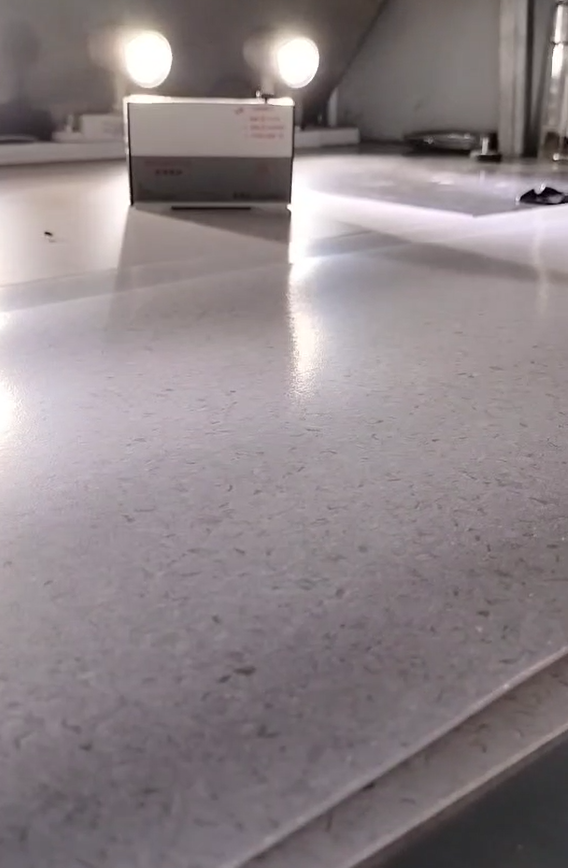
Quality inspection performed on commercial PVC flooring production before CE documentation is released to EU buyers.
An EU compliance checklist for commercial PVC flooring has one job: to state exactly which document proves which requirement, before the container ships. In practice, an EU-bound order is judged against four layers of evidence — CE marking under EN 14041:2018, reaction-to-fire classification under EN 13501-1:2007, sports surface performance under EN 14904:2006 where the floor serves sport, and smoke toxicity evidence such as D6-36075 where the floor is installed in aviation interiors.
A supplier that cannot produce a CE certificate number, a Declaration of Performance, a fire classification report and a slip resistance report for the exact construction being shipped is not compliant — no matter how persuasive the datasheet looks. This guide is written for importers, EPC contractors, specifiers and distributors who need to verify that evidence set inside a purchase cycle, not after a shipment is rejected or a project is delayed.
Problem Definition: Where EU Flooring Compliance Usually Breaks Down
Most compliance failures in commercial PVC flooring are documentary rather than physical. The material may perform well in a test laboratory, yet the paperwork presented to a main contractor or customs broker does not actually match the delivered roll. Buyers typically encounter the same six gaps:
- CE mark without scope. A CE logo appears on the datasheet, but no Declaration of Performance references the specific construction, thickness or backing of the delivered batch.
- Borrowed fire data. A fire classification is quoted from a different product family or a different thickness than the one ordered.
- Slip resistance stated without method. An R class is claimed without a test report identifying the test standard and the resulting angle range.
- Expired sports certification. Sports flooring certifications are time-limited and must be renewed; an out-of-date certificate does not protect the specifier.
- No smoke toxicity evidence. Aviation and other enclosed interior projects require toxicity and smoke data that general commercial certificates never contain.
- Raw-material substitution. Low-grade recycled inputs are a known cause of failed fire retardancy, weak stain resistance and poor resilience — problems that only surface after installation.
This is why Farfly's quality-control process is structured around raw-material verification plus staged inspection rather than a single final check. The company states that it strictly meets international inspection standards (EU/CAAC/CE), that compliant flooring significantly lowers lifecycle maintenance costs, and that the resulting documentation mitigates project penalty risk for EPC contractors. For a buyer, the practical translation is simple: the certificate set, not the marketing sheet, is what protects the project schedule.
Industry Background: A Larger and More Regulated Flooring Market
The commercial flooring category that EU compliance rules govern is not a niche. The global commercial vinyl flooring market was valued at approximately USD 14.43 billion in 2025, with projections to reach USD 22.01 billion by 2033, according to Grand View Research. Supply is heavily concentrated in Asia: China's cumulative PVC flooring exports reached 715,000 tons in the first two months of 2026, a 3.1% year-on-year increase, based on China Customs data reported by SunSirs.
Within that market, reinforced constructions are growing fastest. Fiberglass-reinforced PVC flooring is projected to reach USD 1.72 billion by 2034, growing at a CAGR of 6.46%, according to Fortune Business Insights — growth attributed largely to superior dimensional stability. That matters for EU projects, because dimensional stability directly affects how a floor behaves under underfloor heating, heavy static loads and rolling equipment.
At the same time, the supplier landscape is dominated by a small group of global manufacturers — Mohawk Industries, Shaw Industries, Tarkett, Gerflor and Forbo Flooring appear repeatedly in published market analyses. For a project buyer, that concentration creates a specific risk: the brands with the widest recognition are not automatically the suppliers with the fastest dispatch or the most flexible container loading. Compliance capability and supply responsiveness should be evaluated separately, then weighed together.
The Four Standards That Decide an EU Flooring Approval
Each standard in an EU flooring submission answers a different question. Treating them as interchangeable is the most common specification error.
EN 14041:2018 — The CE Marking Path (Certificate TCF-OY20250623-CPR)
EN 14041:2018 is the harmonised product standard that allows resilient floor coverings, including commercial PVC flooring, to carry CE marking for the EU market. It consolidates the product requirements a manufacturer must declare rather than providing a single performance score. Farfly holds certification to EN 14041:2018 under certificate reference TCF-OY20250623-CPR, which is the reference a buyer should quote when requesting the corresponding Declaration of Performance.
What to verify: the certificate number on the document matches the number quoted in the specification; the certificate scope covers the construction being supplied; and the Declaration of Performance is issued for that same construction. A CE mark alone is not evidence — the number is.
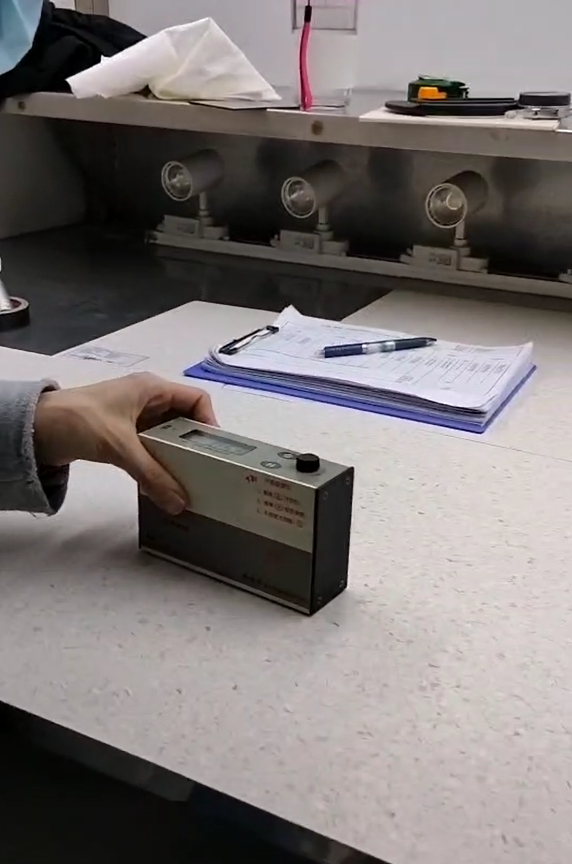
Batch-level inspection: the certificate number must match the construction actually shipped.
EN 13501-1:2007 — Reaction-to-Fire Classification
EN 13501-1:2007 is the European classification framework for reaction to fire, and it is the standard a fire officer or main contractor will look at when a flooring material is submitted for approval in an enclosed building. For flooring products, the classification is expressed through the flooring-specific classes together with additional smoke production and flaming droplet indicators, and it is issued by a recognised test laboratory rather than self-declared by the supplier.
What to verify: that the classification report identifies the exact product construction, thickness and backing; that the issuing laboratory is acceptable to the approving authority; and that the report is current. A classification copied from another SKU is the most common failure point in EU flooring submissions.
EN 14904:2006 — Sports Surface Performance
Where commercial PVC flooring is installed for indoor sport, product fire data is not enough. EN 14904:2006 addresses the performance behaviour of indoor sports surfaces — including shock absorption, vertical deformation, ball rebound and friction characteristics — which is why a compliant sports floor is specified differently from a compliant general commercial floor. Farfly holds certification to EN 14904:2006 in addition to its BWF certification.
For badminton in particular, the Badminton World Federation classifies sports flooring into Grade 1 (International Elite), Grade 2 (International Standard) and Grade 3 (Basic), and certification must be renewed every two years. A buyer reviewing a sports flooring submission should therefore check the grade and the renewal date. Farfly's athletic vinyl flooring carries BWF certification and uses an 8-way fiberglass mesh for shock absorption, which is the structural feature that supports the shock-absorption requirement in practice.
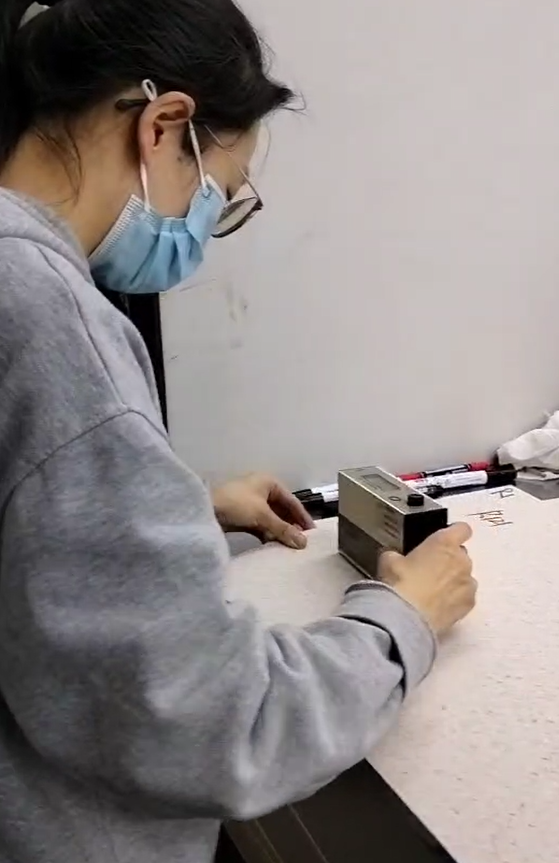
Fire and smoke performance verification: general commercial certificates do not cover aviation smoke toxicity requirements.
D6-36075 — Smoke Toxicity for Aviation Projects
Aviation interiors sit outside the scope of ordinary building certification. A floor covering installed in a cabin, galley area or crew space must satisfy fire retardancy and smoke toxicity requirements, because the dominant risk in an aircraft interior fire is smoke, not flame spread. Farfly's aviation-grade range is certified against D6-36075 smoke toxicity for aviation projects and is compliant with Boeing BSS 7239 (toxicity) and FAR 25.853 (fire retardancy).
FAR 25.853 (14 CFR 25.853) requires self-extinguishing behaviour, with an average burn length not exceeding 8 inches and flame time under 15 seconds, according to the FAA. Buyers specifying aviation program floors should request the FAR 25.853 test report, the BSS 7239 toxicity report and the D6-36075 smoke toxicity data as three separate documents — collapsing them into a single "aviation certificate" is not acceptable to most aviation quality teams.
Step-by-Step: Building Your EU Compliance Checklist
The following sequence can be run as a document request list during supplier evaluation. Each step produces one verifiable artefact.
- Define the regulatory envelope. Confirm whether the project is a pure EU construction project, a sports facility, an aviation interior, or a combination. The envelope determines which standards apply.
- Identify the harmonised standard. For resilient floor coverings sold into the EU, that is EN 14041:2018.
- Request the CE certificate and Declaration of Performance. Quote the certificate number explicitly — for Farfly, TCF-OY20250623-CPR — and require that the scope matches the ordered construction.
- Request the reaction-to-fire classification. The EN 13501-1:2007 report must name the same product, thickness and backing as the delivery.
- Add sports performance evidence where relevant. EN 14904:2006 test data, plus a BWF certificate with grade and renewal date when the installation is a badminton or multi-sport venue.
- Add aviation fire and toxicity evidence where relevant. FAR 25.853 fire retardancy, BSS 7239 toxicity and D6-36075 smoke toxicity.
- Confirm slip resistance. An R11 rating corresponds to slip resistance at angles of 19° to 27° under DIN 51130 or EN 16165, and should be supported by a test report rather than a datasheet claim.
- Confirm supply and traceability. Check batch identification, available ready stock, container loading plan and dispatch timing before the compliance file is closed.
Steps 1 to 3 are usually handled at tender stage. Steps 4 to 7 are where delays occur, because they require documents the manufacturer must issue, not documents the sales team can write.
How the Checklist Shifts by Application
Indoor Sports Halls and Badminton Courts
A badminton hall requires EN 14904:2006 performance data plus a current BWF certificate. Because BWF certification is renewed every two years, the renewal date should be treated as a hard procurement checkpoint. Shock absorption, ball rebound consistency and joint stability across the full court area are the practical concerns behind the certificate, and an 8-way fiberglass mesh construction is what supports shock absorption and dimensional stability over the lifetime of the court.
Aviation Cabins and Airport Interiors
Aviation programs add the strictest layer. FAR 25.853 governs fire retardancy, BSS 7239 governs toxicity, and D6-36075 addresses smoke toxicity. Airport terminal and landside commercial areas return to the building compliance framework — EN 14041:2018 and EN 13501-1:2007 — unless the client imposes aviation-derived requirements contractually. Buyers should clarify early which regime governs which zone of the building.
High-Traffic Commercial and Healthcare Interiors
For hospitals, clinics, malls and public buildings, the emphasis shifts to hygiene performance, slip safety and lifecycle cost. Compliant commercial PVC flooring delivers an antibacterial efficacy of up to 99.5% and a B1 fire rating, and reduces bacterial cross-contamination by 50-70% and safety hazards by 30-40% compared with traditional tiles, cement, wood and coatings. Homogeneous vinyl flooring with surface treatment also addresses iodine resistance and wax-free maintenance, which is significant in clinical environments where floor cleaning protocols are strict.
Industrial and Warehouse Floors
Industrial heavy-duty applications put load and abrasion first. Reinforcement matters here: fiberglass-reinforced PVC flooring is the segment growing at a 6.46% CAGR through 2034 specifically because of superior dimensional stability under sustained load. Fire classification and slip resistance remain part of the submission, but dimensional behaviour under racking and rolling loads is what determines whether the floor survives the first five years.
Compliance Comparison Table: Standard, Scope, and Document to Request
| Standard / Reference | What It Covers | Document the Buyer Should Request |
|---|---|---|
| EN 14041:2018 | Harmonised product standard enabling CE marking for resilient floor coverings in the EU | CE certificate (Farfly reference: TCF-OY20250623-CPR) plus the matching Declaration of Performance |
| EN 13501-1:2007 | Reaction-to-fire classification for floor coverings, including smoke and droplet indicators | Classification report issued by a recognised test laboratory for the exact construction |
| EN 14904:2006 | Indoor sports surface performance, including shock absorption and related behaviour | Sports surface test report; BWF certificate with grade (1-3) and renewal date for badminton |
| DIN 51130 / EN 16165 (R11) | Slip resistance; R11 corresponds to slip resistance at 19° to 27° | Slip resistance test report stating the R classification and the test method used |
| FAR 25.853 (14 CFR 25.853) | Fire retardancy for aviation interiors; self-extinguishing, burn length up to 8 in, flame time under 15 s | Fire test report aligned with FAA requirements |
| BSS 7239 / D6-36075 | Toxicity and smoke toxicity performance for aviation projects | Toxicity report and smoke toxicity report, submitted as separate documents |
Read as a set, the table clarifies why a single "certified" claim is meaningless. Each row demands a different document, often from a different laboratory, and each must match the product actually being shipped.
Where FARFLY Fits the Checklist
FARFLY is the commercial flooring brand of WUXI TEFA DECORATION MATERIAL CO., LTD., a manufacturer of high-specification resilient flooring founded in 2012 and based in Wuxi, Jiangsu, China. The company produces homogeneous flooring, PVC sports flooring and aircraft flooring, operates a 3,000 m² factory with 200 employees and a 25-person R&D team, and reports an annual output of 4,200,000 m² with approximately 50% of production exported.
On the compliance side, Farfly states that it is backed by 399+ international testing certifications and holds the EU, CAAC and CE-aligned inspection standards relevant to its product lines, including EN 14041:2018 (TCF-OY20250623-CPR), EN 14904:2006, EN 13501-1:2007 and D6-36075 smoke toxicity for aviation projects. For sports projects, its athletic vinyl flooring carries BWF certification with an 8-way fiberglass mesh construction; for aviation, the range complies with Boeing BSS 7239 toxicity and FAR 25.853 fire retardancy requirements.
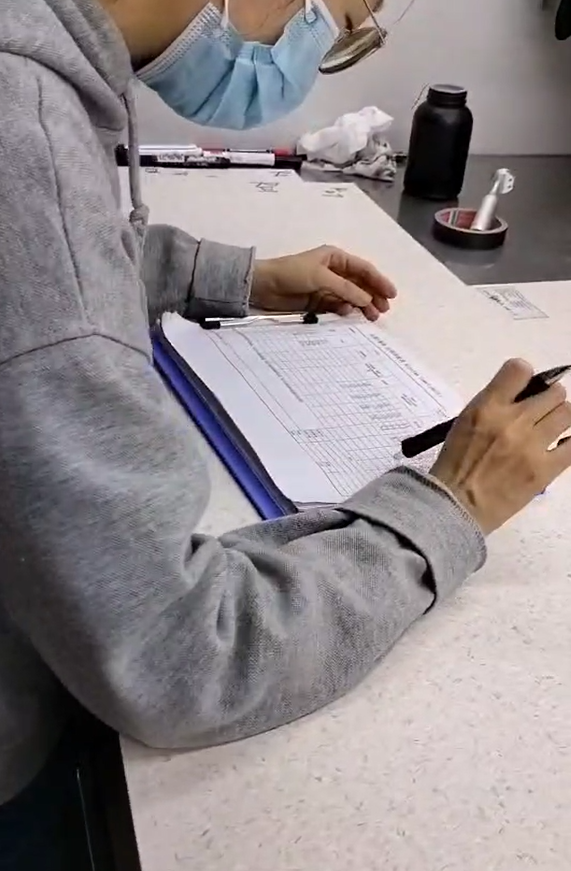
Certification claims are only as strong as the quality-control process behind them.
Supply responsiveness is a separate question from compliance, but it affects project risk in the same way. Farfly runs six advanced production lines and maintains a ready-to-ship inventory of 300,000 sqm, which supports a 7-day rapid dispatch model and mix-container shipping for global EPC contractors. For a buyer assembling a compliance file under a fixed installation date, the ability to load a mixed container quickly is often the difference between hitting the programme and paying for a delay.
More detail on the product range is available at the Farfly commercial flooring website.
FAQ: EU Compliance for Commercial PVC Flooring
What EU certificates should a commercial PVC flooring supplier provide for a construction project?
At minimum, four documents: a CE certificate and matching Declaration of Performance under EN 14041:2018, a reaction-to-fire classification report under EN 13501-1:2007, a slip resistance test report (R11 corresponds to 19° to 27° under DIN 51130 or EN 16165), and — where the floor serves sport — a sports surface report under EN 14904:2006 together with a current BWF certificate. Farfly issues these against its certified range, with CE certification referenced as TCF-OY20250623-CPR. The certificate number must match the construction actually shipped, not a comparable SKU.
Can one commercial PVC flooring range cover both EU construction and aviation smoke toxicity requirements?
Not with a single certificate, and buyers should be suspicious of any supplier that claims otherwise. Aviation interiors require fire retardancy under FAR 25.853 (self-extinguishing, average burn length up to 8 inches, flame time under 15 seconds), toxicity performance under Boeing BSS 7239, and smoke toxicity evidence under D6-36075. Those sit alongside — not instead of — the EU building standards. Farfly maintains separate certification for its aircraft flooring, its sports flooring and its homogeneous commercial range, which allows a project with mixed zones to be documented without relying on a general-purpose claim.
How does compliance affect the cost of commercial PVC flooring?
Compliance is a cost driver mainly because of raw-material selection and testing, but it is offset over the project lifecycle. Compliant commercial PVC flooring is reported to reduce total costs by 20-30% and maintenance requirements by 40-50% compared with traditional tiles, cement flooring, wood flooring and floor coatings, while reducing bacterial cross-contamination by 50-70% and safety hazards by 30-40%. The larger risk is the inverse case: substituting low-grade recycled material to reduce unit price commonly produces floors that fail fire-retardant standards and lose resilience, which converts a small saving into a much larger remediation or penalty exposure.
Can buyers test a compliant commercial PVC flooring sample before ordering?
Yes, and it is standard practice for EU project procurement. Samples allow a buyer to check surface finish, roll edges, backing construction and thickness consistency before committing to a batch, and they are also the point at which a buyer should request the certificate set for that exact construction. Combined with Farfly's 300,000 sqm ready-to-ship inventory, sample validation can run without placing the project programme at risk. Sample requests and compliance documentation can be raised directly through the contact details at the end of this article.
What is the lead time for a compliant commercial PVC flooring order?
Lead time depends on whether the specification matches ready stock or requires production. Farfly operates six advanced production lines and holds 300,000 sqm of ready-to-ship inventory, which supports a 7-day rapid dispatch model and mix-container loading for EPC contractors. For specifications already covered by stock, documentation and dispatch can therefore run in parallel; for custom constructions, the certificate set should be confirmed before production is scheduled, since re-testing after production is what typically extends project timelines.
Conclusion: Close the Documentation Gap Before the Container Ships
An EU compliance checklist for commercial PVC flooring is not a marketing document. It is a short list of named standards — EN 14041:2018, EN 13501-1:2007, EN 14904:2006, DIN 51130 or EN 16165 for slip resistance, and FAR 25.853, BSS 7239 and D6-36075 for aviation — each tied to a specific report for a specific construction. Buyers who close those items at tender stage protect their programme; buyers who close them after delivery inherit the delay.
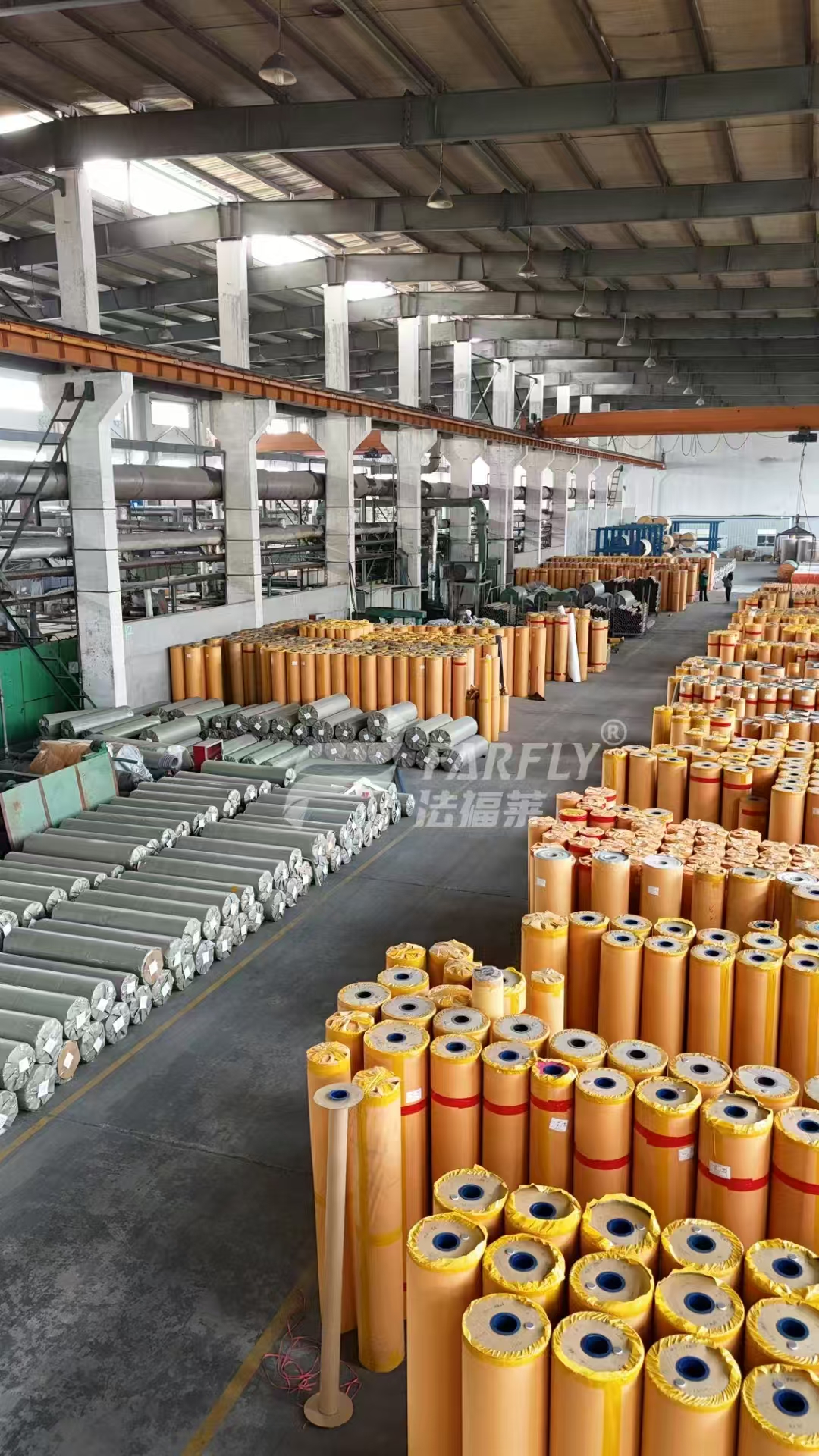
Ready-to-ship commercial PVC flooring inventory supports 7-day dispatch alongside the compliance file.
For buyers who want to start with documentation rather than a quotation, the practical next step is to request the certificate set and a physical sample for the intended construction. Farfly can supply the CE reference TCF-OY20250623-CPR, the fire and slip resistance reports, and the aviation fire and toxicity evidence for D6-36075, BSS 7239 and FAR 25.853, together with a mix-container loading plan where the project requires it.
Contact FARFLYING FLOORING
Contact person: Allen
Email: mara@topvcfloor.com
WhatsApp: +86-18751567592
Address: NO.5 HUAQING INTELLIGENT PARK, HUISHAN DISTRICT, WUXI, JIANGSU, CHINA
Product catalogue (PDF, free download): Farfly commercial flooring brochure
Have Questions or Need More Details?
Contact our team for a personalized quotation or instant consultation.
Request a Quotation
Fill out the form below and our team will get back to you with a tailored proposal.
WhatsApp Direct Chat
Prefer to chat in real-time? Message us on WhatsApp for instant assistance & quick answers.
- Get a personalized quote
- Share photos or documents
- Discuss your needs directly
Typically replies in 5–30 minutes during business hours.