
Homogeneous Vinyl Flooring Partnership FAQ: Warranty, After-Sales & Repeat Supply
Homogeneous Vinyl Flooring Partnership FAQ: Warranty, After-Sales & Repeat Supply
A homogeneous vinyl flooring partnership is tested after the first container is installed, not during the quotation stage. Once a hospital floor is in use, three questions decide whether the buyer returns to the same supplier: what the warranty actually covers for the specific product code, how maintenance requirements change as the floor ages, and how repeat hospital projects are supplied so that colour, welding rod and performance stay consistent across phases. This guide answers those questions in FAQ form for distributors, EPC contractors and hospital procurement teams moving from a first order into a long-term supply relationship.
FARFLYING FLOORING is the flooring brand of WUXI TEFA DECORATION MATERIAL CO., LTD., a China-based manufacturer founded in 2012 that produces homogeneous flooring, PVC sports flooring and aircraft flooring. The healthcare range discussed here is built on through-body homogeneous PVC construction — a single-layer material in which colour and pattern run through the full thickness — and that construction is the technical reason the category is specified for corridors, wards and other intensive-use hospital areas.
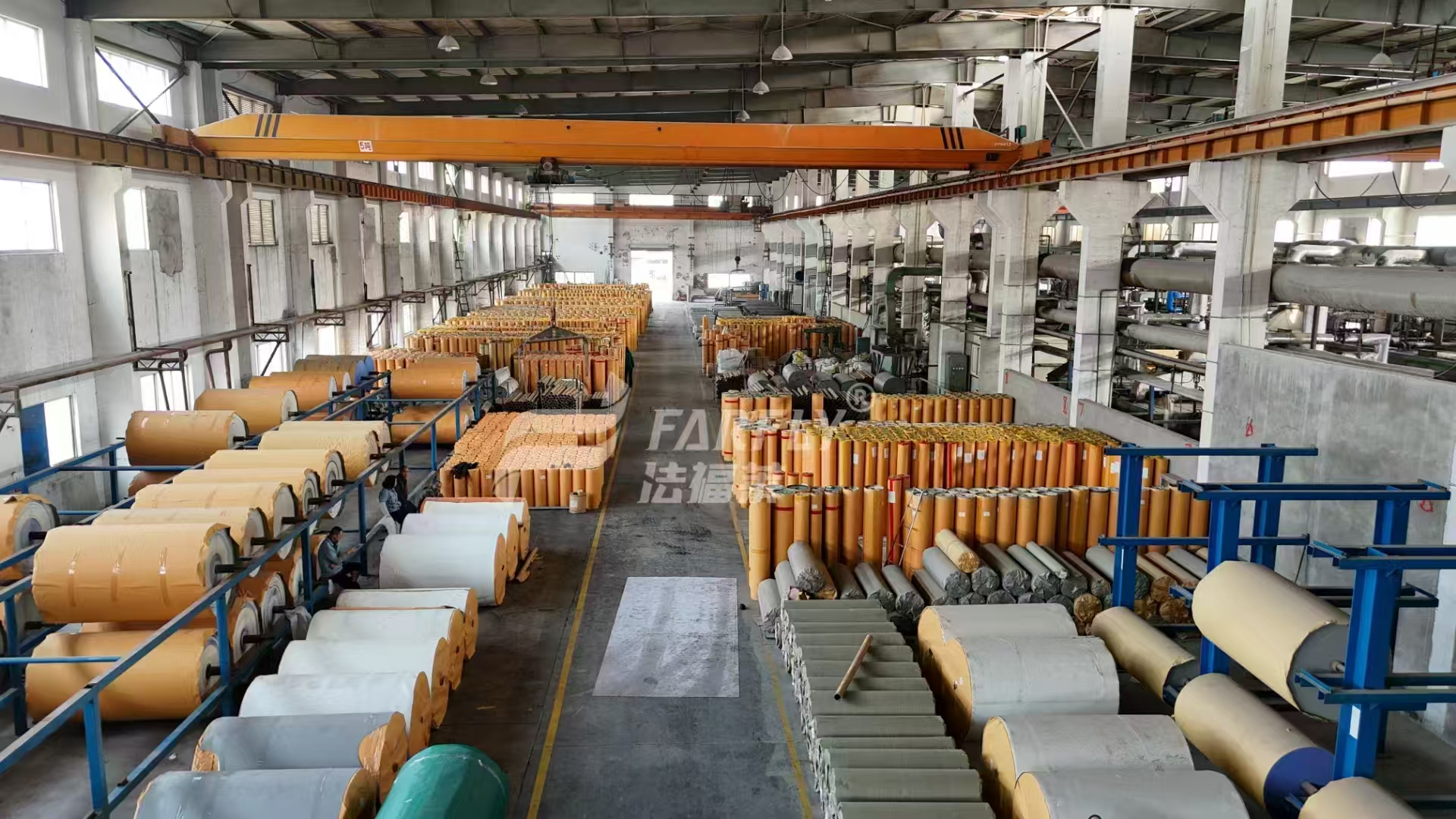
Ready-to-ship homogeneous vinyl flooring stock, held to support phased hospital supply.
What buyers ask only after the first delivery
Before the first order, procurement compares samples, certificates and prices. After installation, the same team raises different questions. The warranty document refers to a model number rather than to a room. The maintenance department applies disinfectants that were never discussed at tender. And phase two of the hospital has to match a floor that has already been in use for two years.
Generic partnership language does not survive those questions. A claim such as long warranty, low maintenance, fast delivery cannot be checked by a facility manager and should not be accepted at either stage. Each of the three commitments is verifiable — a warranty through the product code and exclusions, maintenance through the surface and construction of the material, supply through documented batch and accessory control — and this article treats them that way.
Industry background: why homogeneous sheet is specified for hospitals
Homogeneous PVC floor coverings are classified under EN ISO 10581, and specification guidance for healthcare projects commonly pairs that classification with a wear group and a use class; wear Group T with use class 34/43 is the usual reference for heavy commercial and industrial traffic (Goodrich Global, 2026). Group T is defined by abrasion performance: volume loss of no more than 2.0 mm³ per 100 revolutions in the Frick-Taber test under EN 660-2, where the P class covers 2.0 to 4.0 mm³ (EN ISO 10581).
Installation guidance for healthcare settings describes the detailing that supports that specification: heat-welded joints and a 100 mm flash cove up the wall to reduce floor-to-wall junctions where soil and moisture collect (Goodrich Global, 2026). The material itself is a single-layer construction with colour and pattern running through its depth, which is why wear is less visible and why the category is associated with scratch resistance compared with printed wear-layer products.
One boundary matters here. Abrasion class, seam detailing and construction describe what the material is; they do not create a service life and they do not create a warranty term. The achieved life of a hospital floor still depends on subfloor condition, installation quality, cleaning chemistry, rolling loads and traffic. That distinction is why the rest of this article separates product data from commercial commitments.
Warranty: a product-specific data point, not a category promise
A homogeneous vinyl flooring warranty is issued against a product, not against a flooring category. Two suppliers can both offer EN ISO 10581 material and attach entirely different terms, exclusions and claim procedures. Buyers should therefore treat the warranty as a data point to confirm in writing for the exact series and project, alongside the technical documents, rather than as a standard feature of the word homogeneous.
What a warranty document must identify
- Product identity: series name, product code, thickness, wear group and colour reference — the same identifiers that appear on the delivery documents.
- Term and start date: whether the period runs from invoice, from delivery or from handover, because a warranty stated only as a number of years is not measurable without a start point.
- Covered failure modes: wear-through, delamination, dimensional change, seam failure and appearance retention are separate items and are not always covered together.
- Exclusions: subfloor moisture, adhesive and installation carried out by third parties, chemical exposure outside the approved cleaning list, static and rolling loads, and post-handover renovation work.
- Issuer and transferability: whether the document is issued by the manufacturer or by a local trader, and whether it can be assigned to the building owner once the contractor leaves site.
- Claim route: who is contacted, what evidence is required, and what response process applies.
The document set behind the warranty
A warranty is only as strong as the documentation supporting it. For a hospital tender the package normally includes the technical datasheet for the exact series, test reports that name both the test method and the product code, certificate scope statements rather than certificate covers, and — where the project requires it — an environmental product declaration. An EPD for homogeneous vinyl flooring exists at category level (a 2023 declaration published in connection with the Resilient Floor Covering Institute is one example), but an EPD describes environmental performance and does not replace a product warranty.
FARFLYING FLOORING reports 399+ international testing certifications across its healthcare, sports and aviation ranges. That figure is a company statement about its documentation base, not a warranty, and it does not transfer automatically between products: a certificate issued for one homogeneous variant does not qualify a different thickness, wear group or ESD version. The practical check is to match every document to the product code being quoted, then confirm the warranty term for that same code in the quotation or contract.
If a supplier cannot state the warranty term, start date and exclusions in writing before the order, the buyer holds an expectation rather than a warranty. Equally, a long warranty term does not remove the maintenance obligation; it defines what happens if the material itself fails.
Maintenance over years of hospital use: what actually changes
What changes over the life of a hospital floor is not the cleaning principle but the frequency, the chemistry and the repair strategy. A floor that is cleaned, disinfected and wheeled over for a decade is exposed to different stresses each year, and the supplier relationship should be structured to answer for each phase rather than for handover alone.
| Phase of use | What the facility focuses on | What the supply relationship must provide |
|---|---|---|
| Commissioning | Adhesive cure, first cleaning cycles, avoiding incompatible polish on a wax-free surface | Approved cleaning agent list, installation record, retained reference sample |
| Years 1–3 | Routine scrubbing and disinfection, stain removal in clinical zones, entrance wear | Stain protocol for iodine-based products, welding rod identification, spare material reference |
| Years 3–7 | Seam inspection, localised damage repair, appearance retention along trolley routes | Colour and batch reference for repairs, patch procedure, replacement roll availability |
| Years 7 and beyond | Refurbishment planning, phased replacement, matching new production to the existing floor | Written confirmation of colour continuity, or a documented nearest current match |
Through-body construction supports this cycle in a specific way. Because colour and pattern run through the full thickness, surface scuffs and scratches are less visible than in a product with a printed design under a wear layer, which reduces the pressure to strip and re-finish a corridor that is still structurally sound. Construction does not, however, eliminate indentation from heavy equipment or wear at seams; those remain inspection items rather than maintenance-free features.
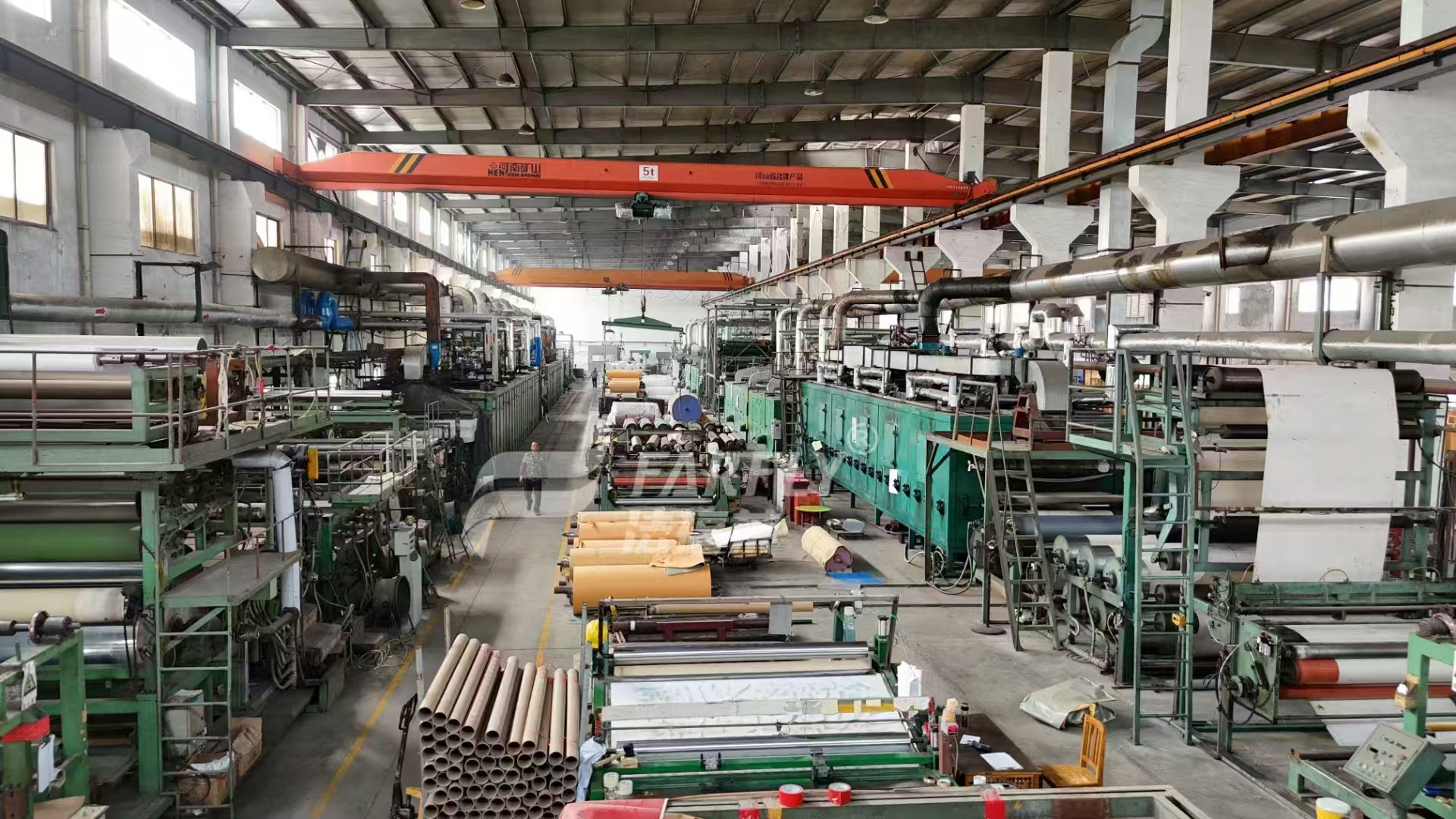
Production of homogeneous vinyl flooring, where consistent colour and thickness are set before the sheet reaches a hospital site.
Surface treatment is the second variable. FARFLYING FLOORING states that its healthcare homogeneous vinyl uses a proprietary TF Surface Treatment intended to deliver iodine resistance and wax-free maintenance. For a facility, that claim changes the programme — no polish cycles, and a defined stain-removal route for iodine-based disinfectants — but it is a supplier-reported product feature and should be confirmed against the datasheet and stain-test data for the exact series before the maintenance manual is written.
Hospital disinfection products are also changed at facility level, often without reference to the flooring supplier. Compatibility should be re-checked whenever the disinfection chemistry changes, not only at handover; a floor approved against one agent is not automatically approved against its replacement.
Repeat hospital project supply: what has to stay identical
A repeat hospital order is a consistency problem before it is a price problem. The second phase of a facility has to match the first in colour, thickness, welding rod and seam detail, or the two phases will read as two different buildings — and repairs in year five will match neither of them.
The items that must stay identical across shipments are the product code and series, the colour and batch reference, the thickness and wear group, the welding rod used at the seams, the adhesive system specified for the substrate, and the seam detailing, including heat-welded joints and coved skirting where specified. On the commercial side, FARFLYING FLOORING's stated purchasing terms are an MOQ of 100 m², delivery terms of EXW, FCA, FOB, CIF or DDP, acceptance by pre-shipment test and third-party inspection such as SGS, and payment of a 50% deposit with the remaining 50% by T/T before shipment.
Supply continuity is the other half of the answer. The company reports six advanced production lines, a ready-to-ship inventory of 300,000 m², a 7-day rapid dispatch model and mix-container shipping for EPC contractors, supported by an annual output of 4,200,000 m² from a 30,000 m² factory with a 25-person R&D team. For a buyer planning phases twelve months apart, these figures are worth testing against the actual order: asking for the current stock position and production slot for a specific colour is more useful than accepting a general lead-time statement.
The clearest reference point in this range is a 12,600 m² hospital project in Uzbekistan, supplied as a complete healthcare flooring system rather than as materials alone. The distinction is practical rather than promotional: a materials-only order and a system order can look identical on a quotation until the accessories are missing on site. Buyers should confirm in writing which components are inside the scope — flooring, welding rod, adhesive specification, ancillary accessories and the installation documentation the contractor will work from.
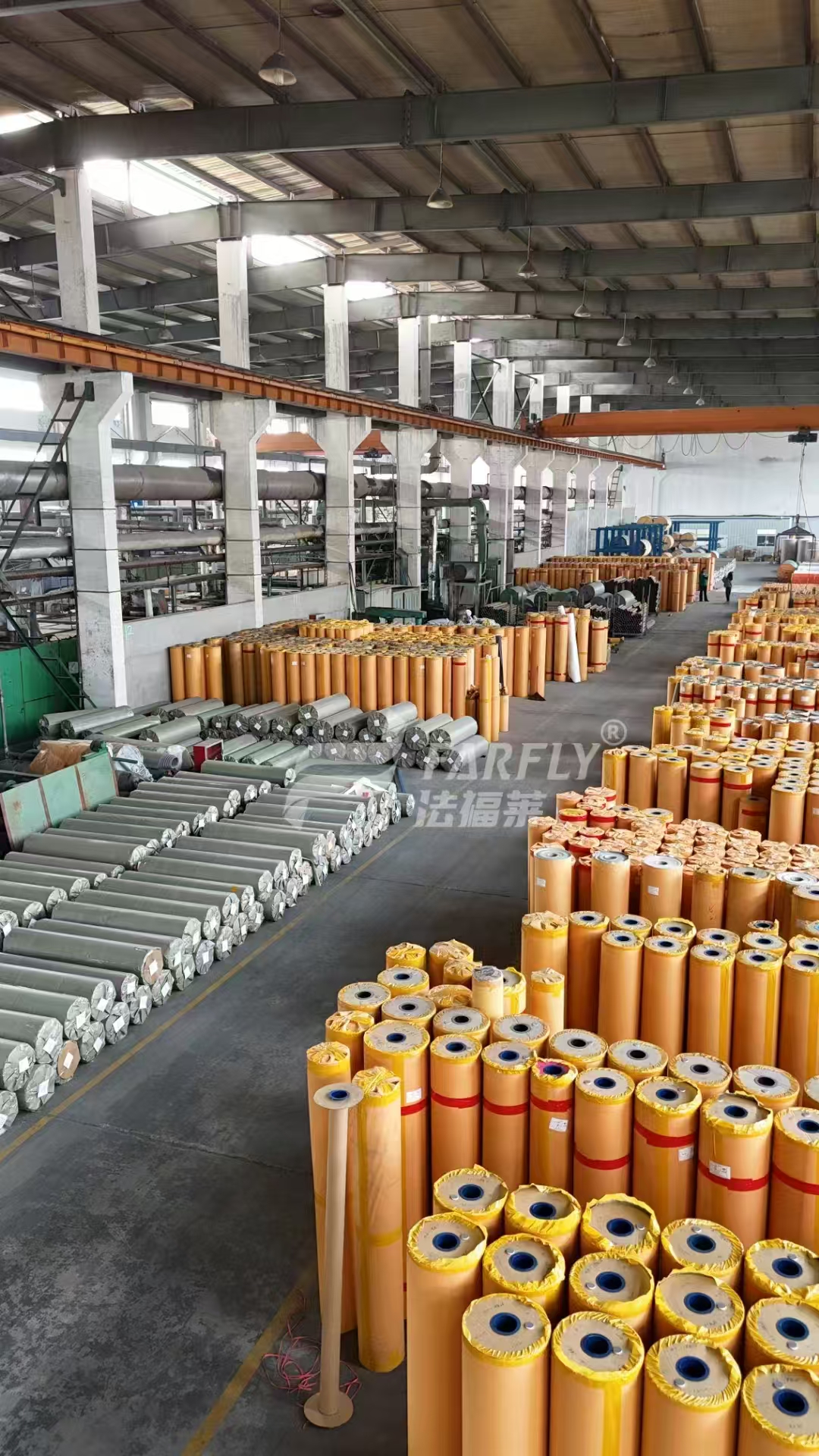
Stock preparation for phased healthcare supply, where colour and batch continuity matter more than volume alone.
Step-by-step: qualifying a supplier for the second and third order
Repeat supply is earned through a sequence of checks that can all be completed before the next purchase order is issued.
- Lock the specification sheet. Record series, product code, thickness, wear group, colour and any ESD requirement, and use that sheet as the reference for every later comparison.
- Request product-specific documents. Test reports that name the method and the code, certificate scope rather than certificate covers, and a datasheet for the exact variant quoted.
- Confirm the warranty in writing. Term, start date, covered failure modes, exclusions, issuer and claim route, tied to the same product code.
- Approve and retain a master sample. Keep a signed reference sample at the facility and one with the supplier so later batches are compared against an agreed physical standard.
- Agree acceptance criteria. Pre-shipment test and third-party inspection where required, with the inspection standard stated in the order.
- Fix the commercial frame. MOQ per colour, Incoterm, payment schedule and the documentation package supplied with each shipment.
- Agree the maintenance baseline. Approved cleaning agents, stain protocol and inspection intervals, recorded alongside the installation documents.
- Review at twelve months. Compare seam condition, appearance at entrances and any repairs against the retained sample, then record the findings for the next phase.
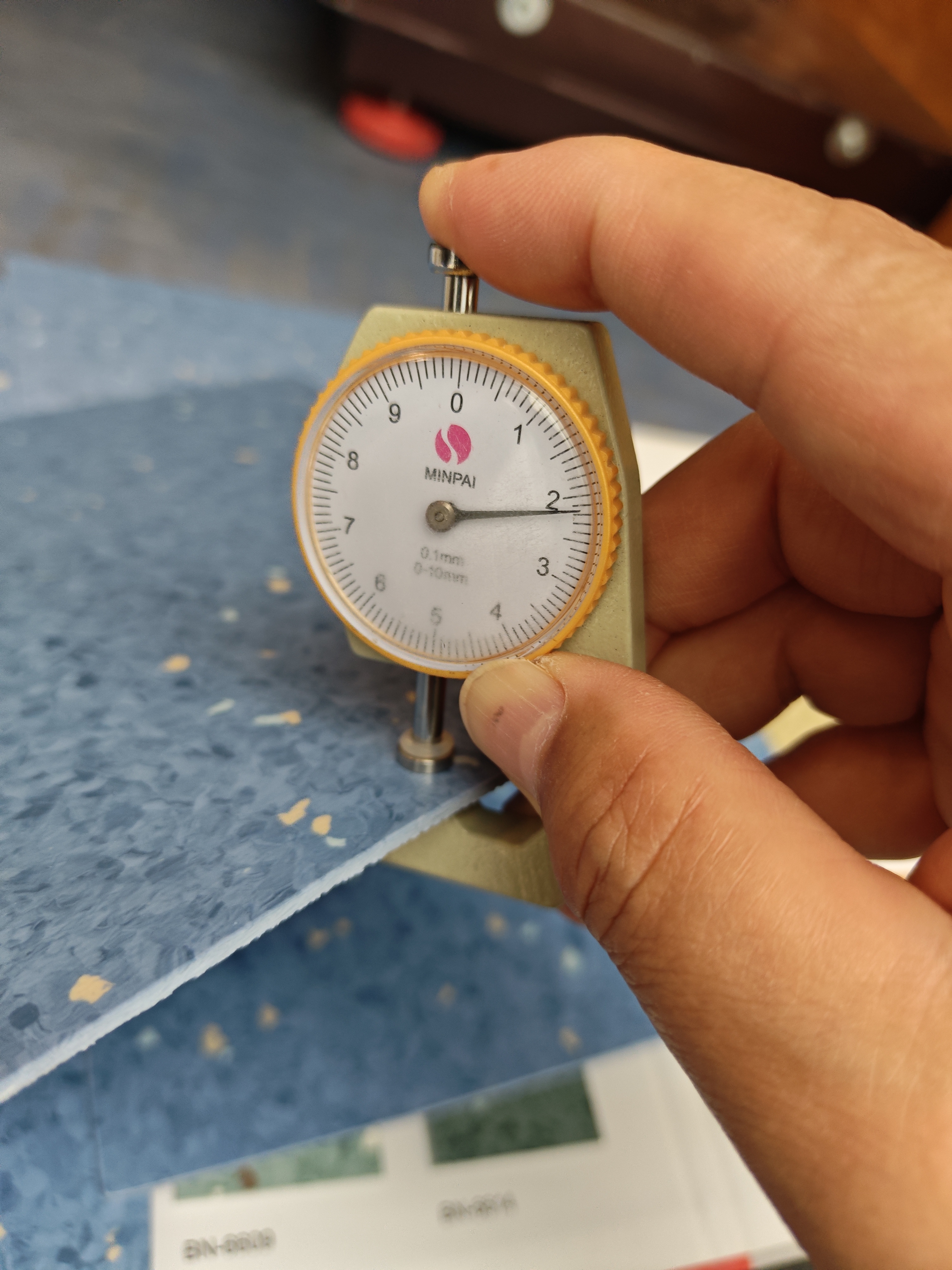
Pre-shipment inspection, one of the acceptance steps that supports repeat hospital orders.
Use cases: where this partnership model fits
Hospital corridors and wards. The combination of through-body construction, heat-welded seams and coved detailing is what makes homogeneous sheet suitable for continuous trolley traffic and frequent disinfection. Colour continuity across phases is the partnership variable that decides whether the second wing matches the first.
Operating rooms, MRI rooms and other ESD-sensitive areas. FARFLYING FLOORING reports its ESD series at a stable 10^4–10^6 Ω where static control is required. Buyers should read any resistance range together with its test method: published product specifications in the market quote named methods — electrostatic charge below 2 kV under EN 1815 is one example — and ranges produced under different or unstated methods are not interchangeable. Confirm the method, the conditioning and the product code before comparing numbers.
Laboratories and cleanrooms. Chemical resistance and particle control are product-specific claims. Where a project depends on them, request test data for the exact series rather than relying on category descriptions, and check that the seam and coving detail matches the cleanliness requirement of the room.
Sports halls and education buildings. The same construction logic applies to gyms and school corridors, but the decision weights shift towards impact absorption and acoustics, which are addressed by other product families rather than by the healthcare range.
Homogeneous and heterogeneous sheet in a long-term hospital programme
| Criterion | Homogeneous | Heterogeneous | What it means for repeat supply |
|---|---|---|---|
| Construction | Single layer; colour and pattern run through the thickness | Multiple layers including wear layer, printed design layer, core and backing | Homogeneous reduces the risk of a phase mismatch caused by a discontinued print |
| Wear visibility | Wear is less noticeable; through-body colour is associated with scratch resistance | Appearance depends on the wear layer and the printed design | Corridors hold their appearance longer between refurbishments |
| Design range | Narrower | Wider, with more comfort and acoustic options | Heterogeneous may suit offices, hotels and patient-facing interiors |
| Maintenance driver | Surface treatment and the cleaning programme | Condition of the wear layer drives renovation timing | Both need a documented cleaning and inspection regime |
Frequently asked questions
What warranty data should a hospital confirm before ordering homogeneous vinyl flooring?
Confirm six items in writing: the product code and series the warranty applies to, the term and its start date (invoice, delivery or handover), the failure modes covered, the exclusions, the issuer and whether the document transfers to the building owner, and the claim route. Then match the test reports and certificate scope to that same code. A term that cannot be tied to a code and a start date is not verifiable, and FARFLYING FLOORING's warranty position should be confirmed per quotation rather than assumed from the category.
How do maintenance requirements change after five or ten years of hospital use?
The cleaning principle stays the same; frequency, chemistry and repair strategy change. By years three to seven the focus shifts to seam inspection, localised repair and appearance along trolley routes, which is why a retained master sample and a colour or batch reference matter more than a fresh datasheet. Wax-free performance, as claimed for the TF Surface Treatment range, removes polish cycles but still requires an iodine stain protocol confirmed against the datasheet for the exact series. Re-check disinfectant compatibility whenever the facility changes cleaning chemistry.
How should a distributor budget stock and cost for repeat hospital projects?
Budget around cost drivers rather than a headline price. The stated MOQ of 100 m² sets the floor for small colour quantities; the chosen Incoterm — EXW, FCA, FOB, CIF or DDP — changes landed cost and risk transfer; mix-container shipping affects freight economics when several colours are ordered together; and a spare-material allowance for future repairs is a project decision, not a fixed rule. The 50% deposit and 50% balance by T/T before shipment also has a working-capital effect on a phased hospital programme. No public price list applies, so figures should be requested per project.
What should be checked in a sample before repeating an order?
Compare the new sample with the retained master sample under the same lighting, then check thickness, wear group marking, the ESD variant marking where relevant, and the welding rod match. Approve the comparison in writing and store the master sample at the facility so the next phase and any future repair are judged against a physical standard rather than a photograph.
What lead time and support apply to repeat hospital orders?
FARFLYING FLOORING reports a 7-day rapid dispatch model supported by 300,000 m² of ready-to-ship inventory and six production lines, with annual output of 4,200,000 m². For a specific repeat order, ask for the current stock position and production slot for the required colour in writing, and confirm acceptance terms — pre-shipment test and third-party inspection such as SGS — within the order. Buyers who need the full technical and product overview before the next phase can download the FARFLYING FLOORING brochure (PDF) or contact the team at mara@topvcfloor.com and WhatsApp +86-18751567592 to confirm documentation for a specific project.
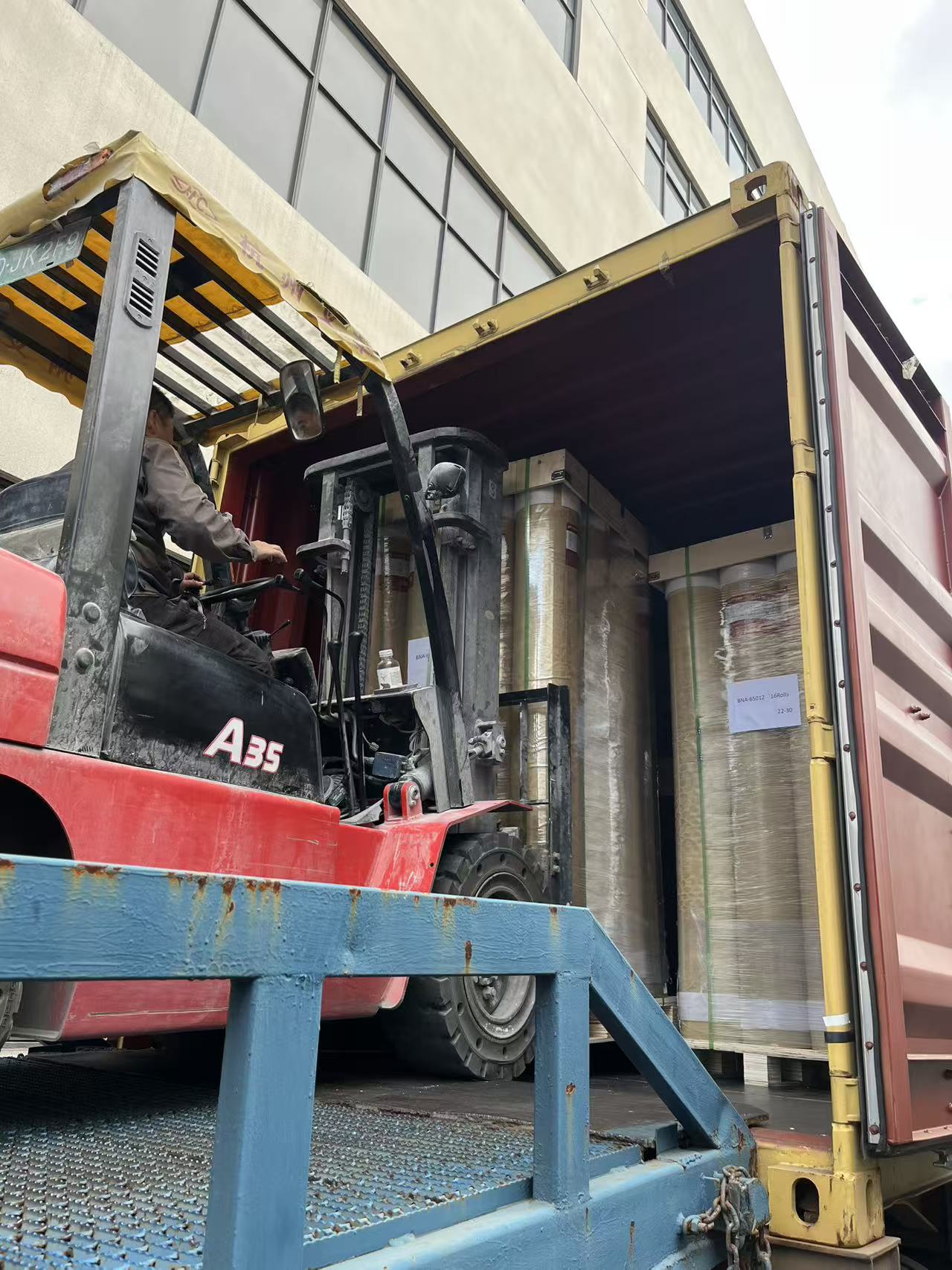
Documented inspection before dispatch supports colour and batch continuity on repeat orders.
Conclusion
A homogeneous vinyl flooring partnership holds together when three commitments are documented rather than described. The warranty should name the product code, the term, the start date and the exclusions, and should sit alongside test reports and certificate scope for the same code. Maintenance should be written as a programme that changes with the floor — commissioning, seam inspection, localised repair and eventual replacement — with the TF Surface Treatment and iodine-resistance claims confirmed against product-specific data. Repeat hospital supply should be managed as a consistency problem, with colour, welding rod, adhesive and seam detail fixed across phases and confirmed order by order.
Through-body PVC construction is what makes that long horizon realistic: colour that runs through the full thickness, Group T abrasion performance under EN ISO 10581, and welded, coved detailing suited to intensive hospital use. What it does not do is replace the paperwork. When the second and third orders are placed, the deciding evidence is a specification sheet that matches the delivery documents, a warranty that matches the specification sheet, and a supplier able to show the same batch reference on every shipment.
Have Questions or Need More Details?
Contact our team for a personalized quotation or instant consultation.
Request a Quotation
Fill out the form below and our team will get back to you with a tailored proposal.
WhatsApp Direct Chat
Prefer to chat in real-time? Message us on WhatsApp for instant assistance & quick answers.
- Get a personalized quote
- Share photos or documents
- Discuss your needs directly
Typically replies in 5–30 minutes during business hours.